Roof Replacement
Replacing a Brownstone Roof in New York City:
What to Expect, Costs, and Common Mistakes
Disclaimer: This article is intended for general information and educational purposes only. Every building is unique. This information is not a substitute for a professional on-site evaluation by a licensed roofing contractor or qualified engineer.
Owning a brownstone in Brooklyn or Manhattan is a distinct privilege. You own a piece of New York history, complete with architectural charm, solid bones, and, inevitably, the maintenance responsibilities that come with a 100-plus-year-old structure.
Few things induce anxiety quite like a top-floor ceiling stain during a heavy November downpour. The roof is your brownstone’s primary defense against the elements, and when it fails, the resulting water damage to interiors, plaster details, and structural joists can be catastrophic.
If you are facing a roof replacement, you likely aren’t looking for the cheapest, quickest patch-job. You want a solution that respects the building and ensures you won’t deal with this issue again for decades. This guide is designed to demystify the process of re-roofing an NYC brownstone for homeowners who value longevity and quality craftsmanship.
The Anatomy of a Brownstone Roof (And Why They Fail)
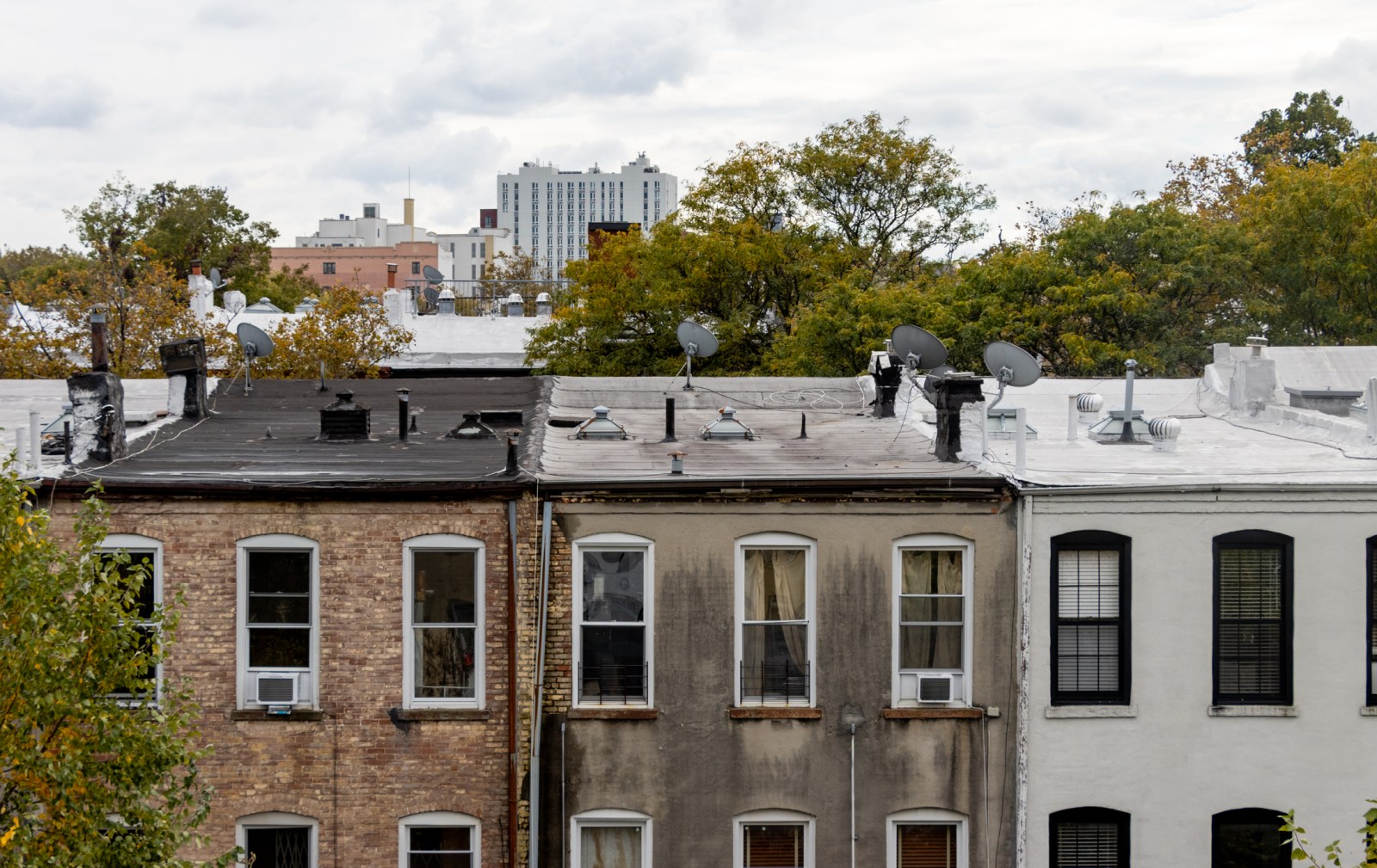
First, a clarification: Your brownstone does not have a "flat" roof. It has a "low-slope" roof. It looks flat, but it must have a slight pitch to direct water toward internal drains or rear gutters/scuppers.
A typical modern brownstone roof assembly consists of three main layers on top of the wood roof deck:
Insulation/Cover Board: Rigid insulation to meet energy codes and provide a stable surface.
The Membrane: The waterproof layer itself.
Flashing and Details: The critical elements that seal edges, corners, and penetrations.
Why Do They Fail?
Rarely does the flat field of the roof just wear out overnight. Failure in NYC brownstones is almost always tied to details and drainage:
Ponding Water: If the structure has settled over a century, low spots form. If water sits on your roof for more than 48 hours (ponding), it accelerates membrane deterioration and increases leak potential.
Parapets and Coping: The brick walls extending above the roofline (parapets) are constantly exposed to weather on both sides. If the mortar joints are cracked, or the stone cap on top (coping stone) is unsealed, water enters the wall cavity and bypasses the roof entirely.
Flashing Failures: The material used to seal junctions—where the roof meets a chimney, a skylight, a vent pipe, or the parapet wall—is the weakest link. As buildings expand and contract with temperature swings, cheap flashing pulls away.
HVAC abuse: Brownstone roofs often host AC condensers. Foot traffic from service technicians and vibration from units sitting directly on the membrane chew up roofs faster than weather does.
The Step-by-Step Replacement Process
A quality roof replacement is a major construction project. Here is the typical timeline:
1. Investigation and Scope: A qualified roofer must get on the roof and perform core cuts (small samples) to see how many existing roof layers are present and inspect the condition of the wood deck beneath. You cannot build a scope of work without knowing what lies beneath.
2. Bidding and Vetting: You receive proposals based on a defined scope. This is where you compare apples to apples (more on this below).
3. Permits and Logistics: Your contractor and architect files for necessary DOB permits. If you are in a landmarked district (LPC), special approvals may be needed, especially if roof elements are visible from the street.
4. Protection and Staging: Before demo, the crew must protect your neighbors’ property, backyard, and the sidewalk. Materials are hoisted to the roof (often via a boom truck).
5. Demolition and Substrate Prep: The old roof is ripped off down to the wood deck. Crucial point: NYC code allows for a maximum of two roof layers. If you already have two, they must come off. Once bare, rotted wood decking must be replaced.
6. Installation: The new insulation and membrane are installed.
7. The Details (Waterproofing): Flashing, drains, and penetrations are sealed. This is the most skilled part of the job.
8. Punch List and Sign-off: A final walkthrough to ensure every seam is checked before final payment.
Choosing Your System: The Menu Options
Not all commercial roofing products suit residential brownstones. You need a system tough enough for foot traffic to the roof deck, HVAC maintenance, and urban grime.
SBS Modified Bitumen (Mod Bit):
The NYC Workhorse. This is asphalt-based, reinforced with polymers, and applied in multiple plies (layers). It’s thick, durable, and handles abuse well.
Pros: Proven track record in NYC; tough against punctures; multi-layer redundancy.
Cons: Can be more expensive due to labor intensity; installation involves heat (torches) or strong-smelling cold adhesives.
EPDM (Rubber Roof):
A large sheet of synthetic rubber.
Pros: Excellent elongation (stretches with building movement); proven longevity if installed correctly.
Cons: It is a single ply—one puncture causes a leak; seams rely heavily on adhesive tapes; black color absorbs massive heat in summer (unless coated).
TPO or PVC (Thermoplastics):
White, reflective single-ply membranes with welded seams.
Pros: Energy efficient (reflects heat); hot-air welded seams are very strong.
Cons: Can be slippery when wet; less puncture-resistant than Mod Bit; quality varies greatly by manufacturer.
Roof Coating vs. Replacement:
Be warned: A silicone or acrylic coating over an old, failing roof is a temporary maintenance item, generally lasting 3–7 years. It is not a roof replacement. Do not let a contractor sell you a "liquid applied roof" as a permanent solution if your underlying substrate is wet or damaged.
Where Quality Lives: The Details That Matter
When reviewing proposals, ignore the marketing fluff and look for these technical specifications. If they aren't explicitly detailed, send the bid back.
Parapet Base Flashing Height: Flashing should extend at least 8 inches up the parapet wall (and ideally higher) to account for snow drifts and wind-driven rain.
Counterflashing and Termination Bars: The top edge of the base flashing must be secured mechanically with a metal termination bar and covered by metal counterflashing tucked into the brick mortar joints. If they just glue the membrane to the brick wall, it will fail.
Coping Stones: The cap stones on your parapets must be evaluated. They likely need repointing and a metal cap flashing installed underneath them to prevent water infiltrating the top of the wall.
Walkway Pads: Your contract must include dedicated walkway pads leading from the hatch to any HVAC units. This protects the main membrane from technician boots.
Drain Details: The connection between the new roof membrane and the existing cast iron drain bowl is critical. Demand a "pro-seal" or similar mechanical clamping ring connection, not just caulk.
No "Pitch Pockets": Obsolete roofers use metal pans filled with tar (pitch pockets) to seal pipes coming through the roof. These always shrink and crack. Modern practice uses pre-fabricated "boots" or liquid-applied resin flashing.
The NYC Constraints Checklist
Brownstone roofing has unique NYC hurdles that influence cost and timeline:
DOB Permits: A full tear-off requires a permit. Don't skip this; if caught, the Stop Work Order will haunt you.
Access: How will materials get up and debris get down? The rear yard? The front via a hoist? Does this require blocking the street?
Sidewalk Sheds: If the work is extensive or poses a risk to pedestrians, the DOB may require a sidewalk shed (scaffolding over the sidewalk). This adds significant cost and time.
Neighbor Protection: In a row house, your roof connects directly to your neighbors. Your roofer must ensure their roof isn't damaged during your demo and that the tie-in between the two roofs is perfectly sealed.
Hiring the Right Team
Red Flags When Hiring:
Providing a quote without walking on the roof.
Suggesting a third layer of roofing over two existing layers (illegal code violation).
Pushing a "coating" system when you have active leaks and saturated insulation.
Asking for large cash deposits upfront before materials arrive.
"We can start tomorrow." Good NYC roofers usually have a backlog.
Questions to Ask Bidders:
"Will you be performing core cuts to verify the existing assembly?"
"How exactly will you protect my neighbor’s adjoining roof and my backyard?"
"Does your insurance specifically cover roofing operations (many general liability policies exclude it)?"
"Explain your warranty—what is covered by the manufacturer, and what is covered by your workmanship guarantee?" (Look for at least a 20-year manufacturer warranty and a 5–10 year workmanship guarantee).
Protecting Your Investment: Years 1–5
A new roof is not "set it and forget it." To maintain your warranty and ensure longevity:
Semi-Annual Inspections: Have a somone check the roof in late autumn (after leaves fall) and early spring.
Clean Drains and Gutters: The number one cause of premature failure is clogged drains leading to massive water weight on the structure.
Log Foot Traffic: Keep a log of HVAC techs or cable installers who go up there. Ensure they stay on walkway pads.
Final Thoughts
Replacing a brownstone roof is a significant capital expenditure, often costing tens of thousands of dollars depending on the complexity of the parapet work and logistics. While the sticker shock can be real, attempting to save money by cutting corners on flashing details or hiring under-qualified labor is the most expensive mistake a NYC homeowner can make. Do it right, do it once, and sleep through the next nor'easter.